

History
BJJ History
From the battlefields of Japan to the streets of Brazil — how Jiu-Jitsu became the art we train today.
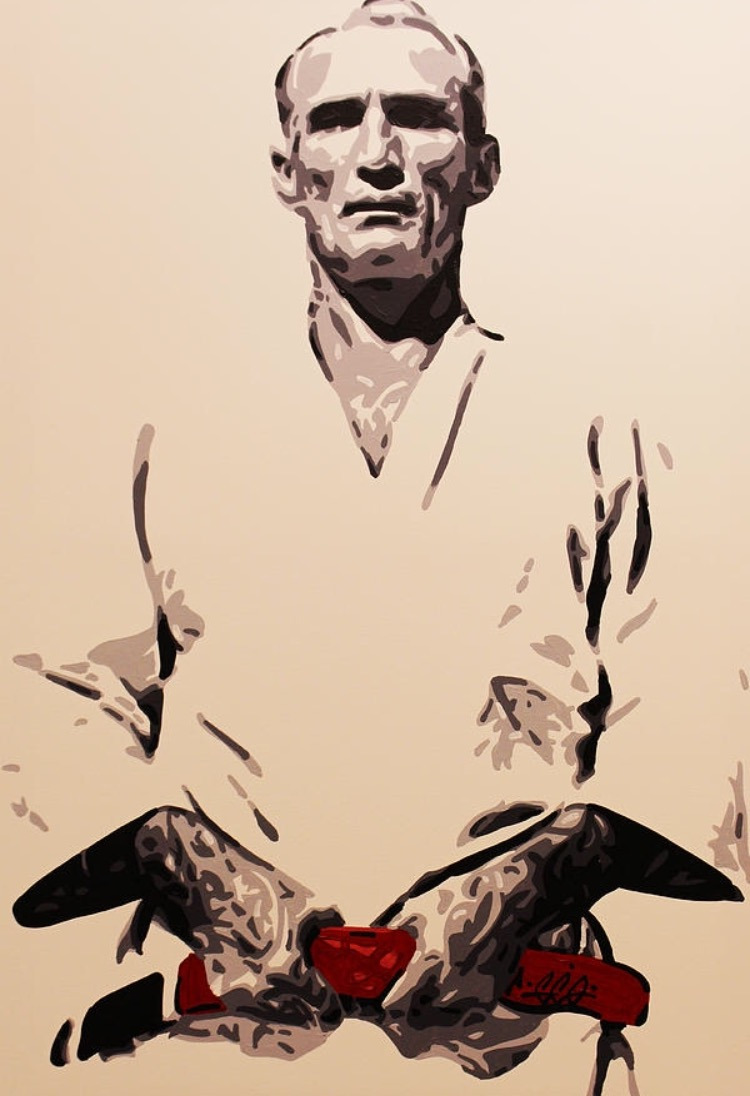
Hélio Gracie helped refine Brazilian Jiu-Jitsu, emphasizing leverage, timing and efficient technique to reduce reliance on size and physical strength.
Origins
Jiu-Jitsu began as a Japanese martial art, practiced by the samurai — the elite warriors of Japan from the 12th to the late 19th century. When a samurai lost his weapon in combat, he had to fight unarmed. These empty-hand techniques were taught in schools called ryu and eventually spread beyond the military, influencing arts such as aikido and judo. Brazilian Jiu-Jitsu, or BJJ, was developed by the Gracie family in Brazil. Carlos Gracie learned Jiu-Jitsu from the Japanese judo champion Mitsuyo Maeda, who settled in Brazil in the early 20th century. It was Carlos's younger brother, Helio Gracie, who transformed the art. Smaller and lighter than his siblings, Helio focused on technique, timing and leverage rather than force. That focus became the heart of BJJ: bringing an opponent to the ground through a takedown, roll or throw, then controlling or submitting them with joint locks and chokes. Because success depends on technique rather than strength, BJJ can be especially effective for lighter or smaller practitioners, including women. It is also practised as a competitive sport, with different rules for gi, no-gi grappling and MMA. What makes Brazilian Jiu-Jitsu unique is that it can keep evolving with the practitioner. As strength, speed and athleticism change over time, technique, timing and understanding can continue to improve. That makes BJJ a martial art that can be studied, refined and enjoyed for a lifetime.
Invisible Jiu-Jitsu
Rickson Gracie is widely regarded as Hélio Gracie's most successful son in BJJ, having remained undefeated in competition since the age of 18, in both BJJ and MMA. His approach emphasizes mastering the fundamentals and maintaining control in any situation, whether in competition or self-defense.
He calls this approach Invisible Jiu-Jitsu: subtle principles of posture, connection, weight distribution, timing, pressure and distance that make techniques effective through efficiency rather than strength.
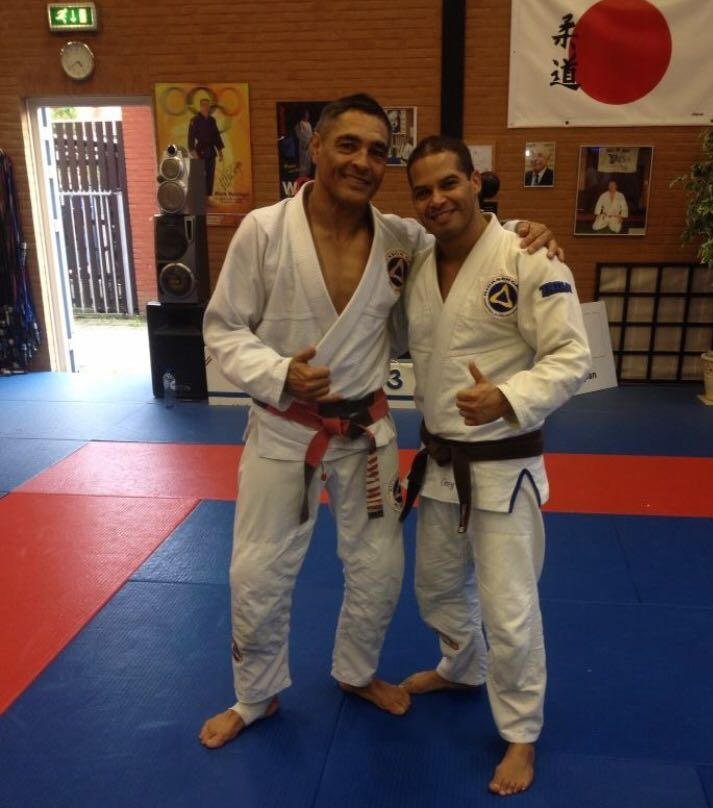
Greg Laclé with Rickson Gracie